
Why Are My Seedlings Leggy?
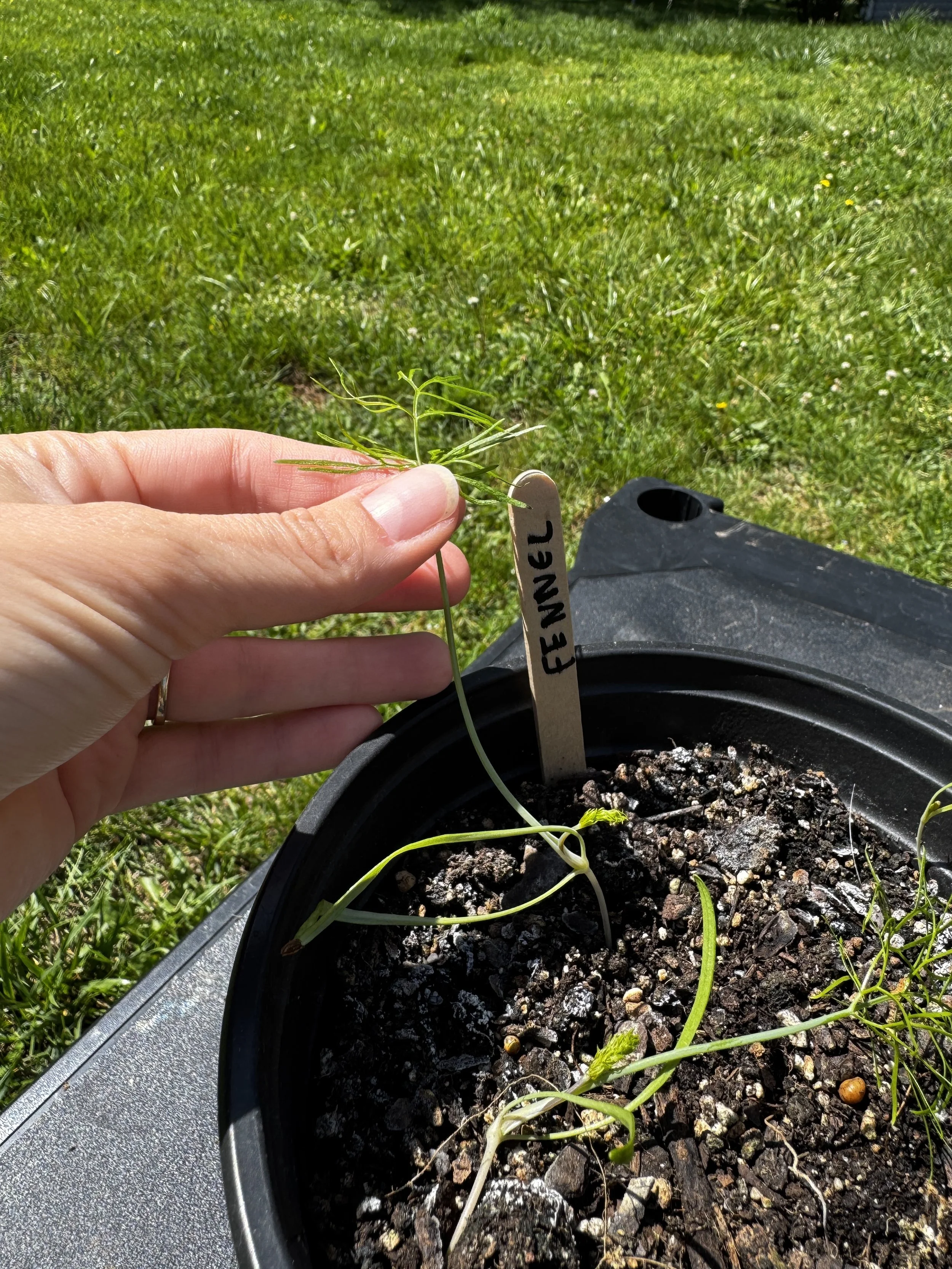
One of the first gardening problems I ran into was leggy seedlings.
At first, I thought they were growing really well.
They were getting taller every day, reaching higher and higher, and seemed determined to take over my seed-starting shelf. Then I started noticing that the stems were thin. Some of them couldn't stand up on their own. Others would flop over if I looked at them too aggressively.
That's when I realized that taller doesn't always mean healthier.
In fact, when it comes to seedlings, tall and skinny is often a sign that something isn't quite right.
The good news is that leggy seedlings are one of the most common problems beginner gardeners face, and in many cases they're relatively easy to fix.
What Does "Leggy" Mean?
A leggy seedling is a young plant that has developed an unusually long stem with relatively little leaf growth.
Instead of being short, compact, and sturdy, the seedling becomes tall, thin, and weak. It often looks stretched out, almost like it's trying to climb toward something.
When seedlings become severely leggy, they may struggle to support their own weight. The stems bend, lean, or fall over completely.
I've had this happen with several plants over the years, including fennel and some of my herb seedlings. At the time, I assumed they just needed more time to mature. In reality, they were trying to tell me something.
The Most Common Cause: Not Enough Light
By far the most common cause of leggy seedlings is insufficient light.
Plants don't have eyes, but they do know where light is coming from.
When a seedling isn't receiving enough light, it responds by stretching toward the source. This process is called etiolation. The plant is essentially searching for better conditions.
The problem is that the plant spends so much energy growing taller that it doesn't develop a thick, sturdy stem.
The result is a seedling that looks impressive from a distance but struggles once you get up close.
This was exactly what happened in my basement seed-starting setup.
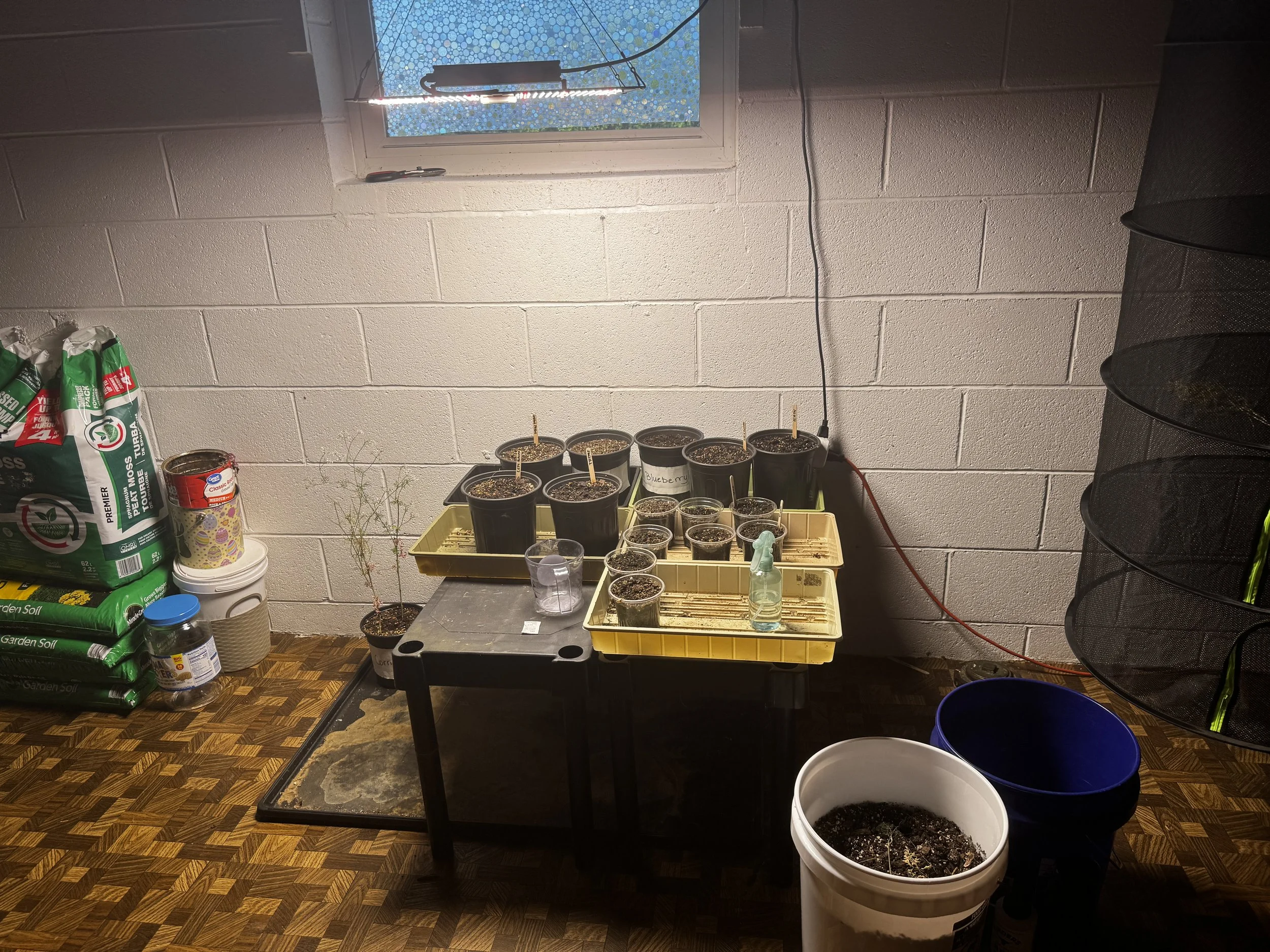
When I first started growing seedlings under lights, I tried to fit as many plants as possible under each fixture. The seedlings on the edges received less light and began stretching upward. The farther the lights were from the plants, the worse the problem became.
The seedlings weren't growing because they were healthy.
They were growing because they were desperate.
Grow Lights Are Often Too High
One mistake I see beginners make frequently is hanging grow lights too far above their seedlings.
I made the same mistake.
Many people assume that because grow lights are bright to our eyes, they must also be bright enough for plants from a considerable distance away. Plants disagree.
Most seedlings perform best when grow lights are only a few inches above the tops of the plants. As the seedlings grow, the lights should be raised to maintain that distance.
Once I started lowering my lights closer to the seedlings, I noticed a huge difference. New growth became shorter, stronger, and much sturdier than before.
The plants stopped reaching.
Window Light Usually Isn't Enough
If you've ever started seeds on a windowsill and ended up with tall, floppy seedlings, you're not alone.
While a sunny window can work for some houseplants, seedlings typically need much more light than most windows provide. Even a bright south-facing window often isn't enough to produce compact, sturdy growth.
The seedlings may survive, but they'll often become stretched and weak as they lean toward the glass.
That's one reason many gardeners eventually invest in grow lights. They're not strictly necessary for every situation, but they make a huge difference when starting seeds indoors.
Heat Can Make the Problem Worse
Light is usually the primary issue, but temperature can contribute as well.
Seedlings that are kept too warm after germination sometimes grow faster than they should. When that rapid growth is combined with inadequate light, the result is often long, weak stems.
Once seeds germinate, many plants actually benefit from slightly cooler temperatures than they needed for sprouting.
It's one reason why some gardeners remove seed trays from heat mats as soon as germination occurs.
The goal is balanced growth, not a race to the ceiling.
Overcrowding Can Cause Stretching
Plants compete for resources.
When seedlings are packed closely together, they begin competing for light just like they would in nature.
Each seedling tries to grow slightly taller than its neighbors. Then those neighbors respond by growing taller as well.
Before long, everyone is stretching upward.
If you've ever planted too many seeds in a tray because you didn't want to waste any, you've probably seen this happen.
I know I have.
Thinning seedlings can feel painful at first, but giving each plant enough room often results in healthier growth overall.
Can Leggy Seedlings Be Saved?
In many cases, yes.
The answer depends on how severe the problem is and what type of plant you're growing.
Tomatoes are famous for their ability to recover. Because tomatoes can form roots along buried stems, leggy tomato seedlings can often be transplanted deeper into the soil. The buried stem develops roots and the plant becomes stronger.
Other plants don't have that advantage, but they can still improve if the underlying problem is corrected early enough.
Providing stronger light, improving airflow, and giving seedlings adequate space can help new growth develop more normally.
The stem that's already stretched won't magically shrink, but future growth can become healthier.
How Airflow Helps Build Stronger Seedlings
One thing I didn't fully appreciate when I started gardening was the importance of airflow.
Indoor seedlings don't experience wind.
Outside, plants constantly deal with breezes that encourage stems to strengthen. Indoors, that challenge doesn't exist unless we create it.
A small fan can make a surprising difference.
The gentle movement encourages seedlings to develop stronger stems and can help reduce fungal issues at the same time.
You don't need a hurricane.
Just enough movement to remind the plants that gravity exists.
How to Prevent Leggy Seedlings
The easiest solution is prevention.
Once a seedling becomes severely stretched, fixing it takes time. Preventing the problem from happening in the first place is much easier.
When starting seeds indoors:
Keep grow lights 2-4 inches above seedlings.
Provide 14-16 hours of light per day.
Thin overcrowded seedlings.
Use a small fan for airflow.
Avoid excessive heat after germination.
Rotate seedlings if growing in a window.
Most importantly, pay attention to the plants.
Seedlings usually start telling you they're unhappy long before they completely flop over.
My Experience With Leggy Seedlings
One of the biggest lessons I learned during my first season of starting herbs indoors was that seedlings need more light than I thought.
I had a shelving unit in my basement with grow lights attached underneath each shelf. In my mind, I had created the perfect setup.
The seedlings had other opinions.
As more plants sprouted, I began filling every available space. The lights were spread across too many seedlings and some plants simply weren't receiving enough intensity. My fennel was one of the worst offenders. It shot upward quickly, developed thin stems, and eventually flopped over.
Once I moved those plants outdoors, many recovered surprisingly well. The combination of natural sunlight and wind helped strengthen them significantly.
It was a good reminder that seedlings aren't trying to be difficult.
They're responding to the environment we give them.
Final Thoughts
If your seedlings are tall, thin, and falling over, don't panic.
Leggy seedlings are one of the most common gardening problems, especially for people starting seeds indoors for the first time. Most often, the cause is simply insufficient light, though temperature, overcrowding, and poor airflow can contribute as well.
The good news is that plants are surprisingly resilient. Correct the conditions, give them time, and many seedlings will recover well enough to become productive garden plants.
And if you're anything like me, you'll probably end up lowering your grow lights a little closer next season.