
What Makes Chamomile Work?
When I first started learning herbalism, I thought chamomile was a pretty simple herb. It's calming, it helps with sleep, it can soothe an upset stomach, and it seems to show up in almost every beginner herbal book ever written. End of story.
Then I started reading more deeply and realized something frustrating. Most articles about chamomile repeat the same list of benefits over and over again without ever explaining why the plant does those things. They tell you chamomile is calming, anti-inflammatory, and good for digestion, but they rarely explain what's actually happening inside the flower.
As I dug into phytotherapy and plant chemistry, I started asking a different question. Instead of asking what chamomile is used for, I started asking what compounds are inside the plant and what those compounds actually do. The answer turned out to be far more interesting than I expected.
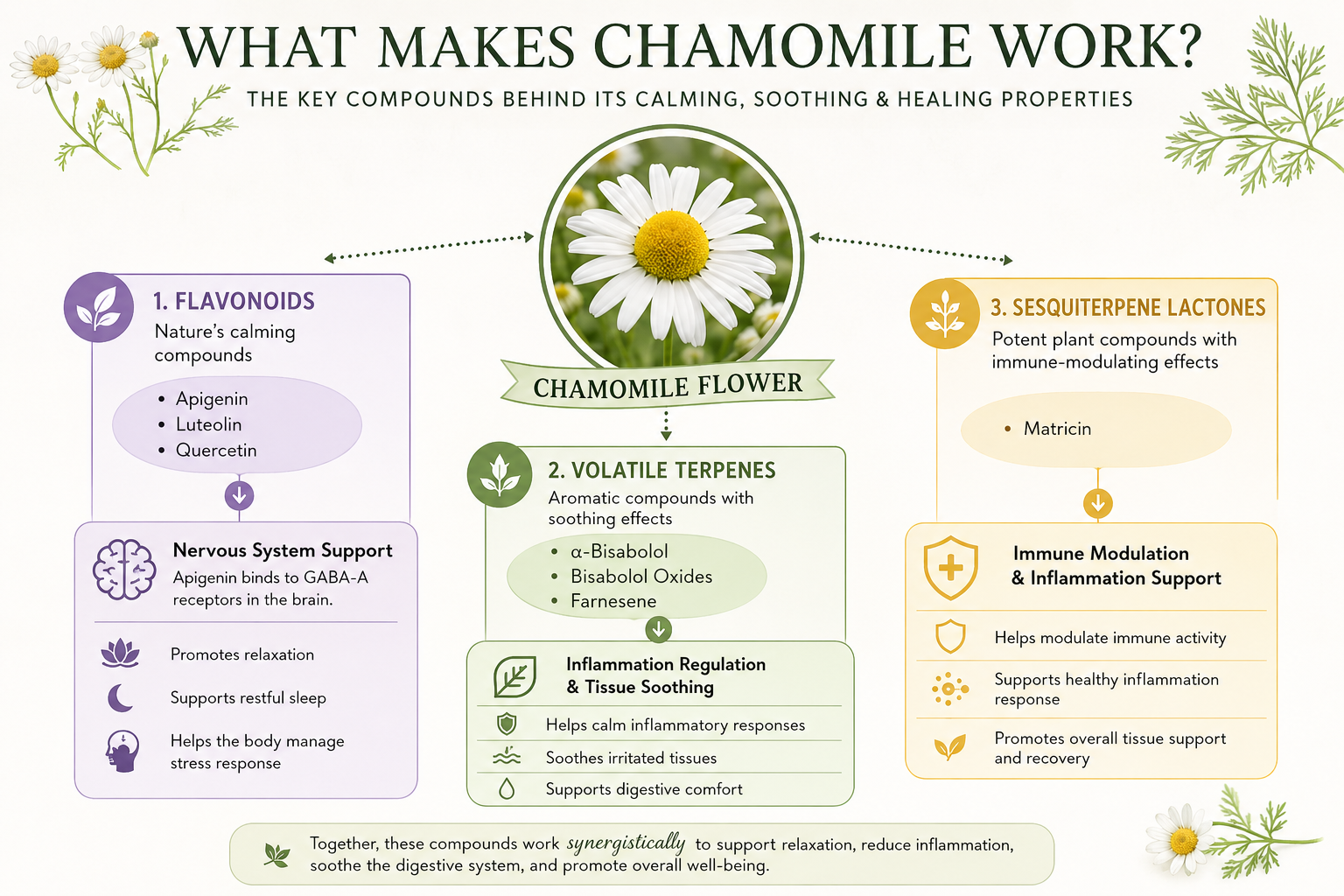
Chamomile doesn't work because of one magical ingredient. It works because it contains several different families of compounds, each contributing something slightly different. Some compounds appear to influence the nervous system. Others help regulate inflammation. Some help explain why chamomile has such a long history of use for irritated skin and digestive discomfort. When you put all of those pieces together, the traditional uses of chamomile start making a lot more sense.
The Compounds That May Help You Relax
If you've spent any time reading about chamomile research, you've probably come across a compound called apigenin. It tends to get most of the attention, and for good reason.
Apigenin belongs to a large family of plant compounds called flavonoids. Plants produce flavonoids for a variety of reasons, including protection from ultraviolet radiation, environmental stress, and pathogens. These compounds are found throughout the plant kingdom, but researchers became particularly interested in apigenin because of the way it appears to interact with the nervous system.
To understand why that matters, we need to talk about GABA.
GABA is one of the body's primary inhibitory neurotransmitters. In plain English, it acts as part of the brain's braking system. Throughout the day, your nervous system is constantly receiving stimulation from your environment. Work deadlines, family responsibilities, social interactions, and even scrolling through your phone all require your brain to process information. GABA helps keep that stimulation from becoming overwhelming.
Researchers have found that apigenin appears to bind to the benzodiazepine site on certain GABA-A receptors. That sounds complicated, but the basic idea is fairly simple. The same receptor site that interacts with certain anti-anxiety medications also appears to interact with apigenin, although much more weakly.
That's one reason chamomile doesn't knock you out or turn you into a zombie. Instead, it may gently encourage the nervous system to shift toward a calmer state. If you've ever had a cup of chamomile tea and noticed that you felt a little more relaxed, a little less tense, or a little more capable of winding down at the end of the day, apigenin may be part of the reason.
What's particularly interesting is that this helps explain why chamomile has traditionally been used for more than just sleep. Herbalists have long recommended chamomile for people who are stressed, irritable, restless, or dealing with a nervous stomach. Those conditions may seem unrelated, but they all involve the nervous system to some degree. Once you understand the connection between apigenin and GABA signaling, those traditional uses start to seem much less mysterious.
Chamomile Isn't Just a Nervous System Herb
If apigenin were the entire story, chamomile would probably be known only as a relaxing tea. But that's not how herbalists use it.
Chamomile has also been used for irritated skin, digestive inflammation, wound healing, mouth sores, and even eye washes. Clearly something else is happening inside the plant.
This is where we start looking at chamomile's volatile constituents, particularly compounds such as α-bisabolol, bisabolol oxides, matricin, and farnesene.
One of the most studied is α-bisabolol. In the plant, compounds like bisabolol help protect against insects, microbes, and environmental stress. Plants can't run away from danger, so they rely on chemistry for defense. What protects the plant often turns out to have interesting effects in humans as well.
Researchers have found that bisabolol appears to influence inflammatory pathways and may help reduce the production of certain inflammatory signaling molecules. Inflammation itself isn't bad. In fact, it's one of the body's most important repair mechanisms. The problem occurs when inflammation becomes excessive or continues longer than necessary.
Think about a sunburn. Some inflammation is part of the healing process, but too much creates redness, swelling, discomfort, and tissue irritation. Compounds such as bisabolol appear to help moderate that response, which helps explain why chamomile has been used for centuries on irritated skin and inflamed tissues.
This also helps explain why chamomile often feels soothing even when you're not drinking it. A chamomile compress, rinse, or salve is exposing tissues directly to compounds that appear to support a more balanced inflammatory response.
The Story of Matricin and Chamazulene
One of the most fascinating things I learned about chamomile is that the chemistry of the plant actually changes depending on how it's prepared.
Fresh chamomile flowers contain a compound called matricin. Matricin is considered one of the major anti-inflammatory compounds found in the plant. However, if chamomile is steam distilled to produce an essential oil, something interesting happens.
The heat of the distillation process converts matricin into another compound called chamazulene.
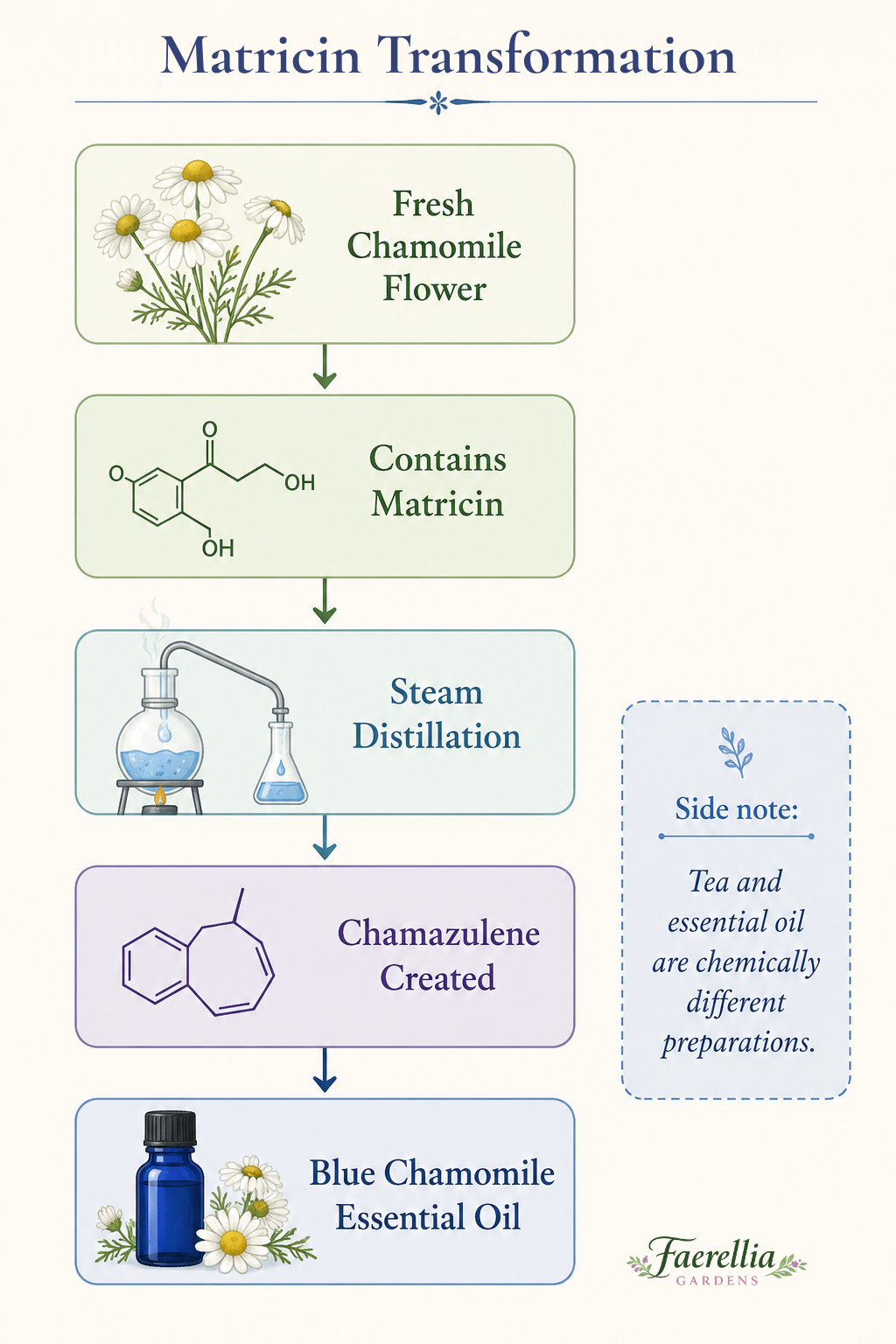
Chamazulene is responsible for the deep blue color found in high-quality chamomile essential oil. If you've ever seen a bottle of genuine German chamomile essential oil and wondered why it's blue instead of clear, chamazulene is the answer.
What's interesting isn't just the color. It's what this transformation teaches us about herbal preparations.
A cup of chamomile tea and a bottle of chamomile essential oil are not chemically identical. The preparation method changes the chemistry of the final product. Some compounds become more concentrated. Others are altered. Still others are left behind entirely.
The more I learn about herbalism, the more I realize that preparation matters. It's not enough to ask what a plant contains. We also need to ask how we're preparing it and which compounds we're actually extracting.
Why Plant Families Matter
One of the biggest breakthroughs in my own herbal studies came when I stopped looking at herbs as isolated plants and started paying attention to plant families.
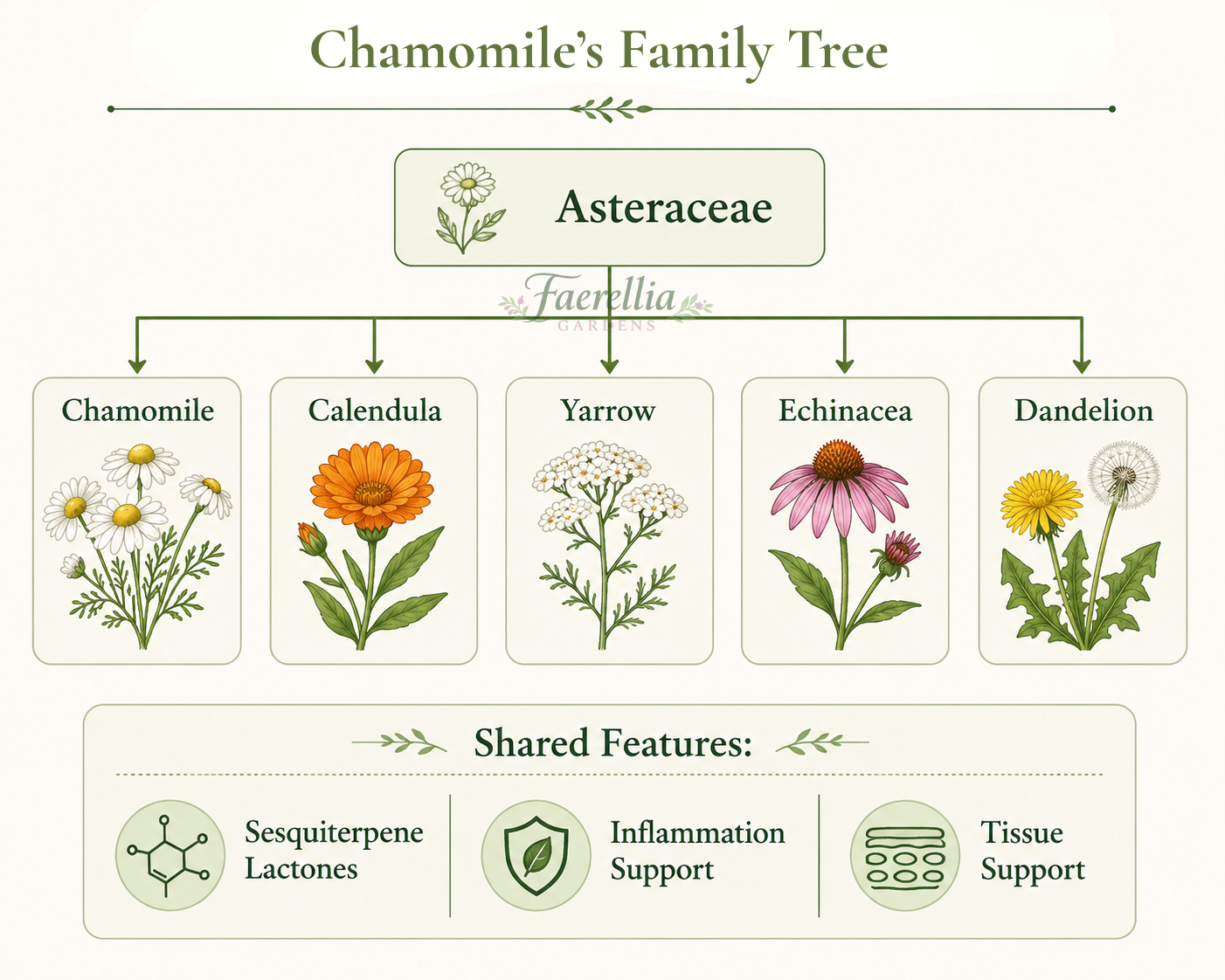
Chamomile belongs to the Asteraceae family, also known as the daisy family. Other members include calendula, yarrow, echinacea, dandelion, and many other medicinal herbs.
At first glance, these plants seem very different. Calendula is famous for skin support. Echinacea is associated with immune health. Yarrow is often used for wound care. Dandelion is known for digestive and liver support.
But when you start looking at their chemistry, patterns begin to emerge.
Many members of the daisy family contain compounds called sesquiterpene lactones. Plants use these compounds as part of their defense system against insects and grazing animals. In humans, many sesquiterpene lactones appear to interact with inflammatory and immune pathways.
This doesn't mean every daisy-family plant does the same thing. Plant chemistry is much more complicated than that. However, it does help explain why members of the same family often share certain medicinal themes.
Once I started learning plant families and their chemistry, herbalism became much easier to understand. Instead of memorizing hundreds of individual plants, I started recognizing recurring patterns.
Why Herbalists Use the Whole Herb
The deeper I go into phytotherapy, the less interested I become in finding a single active ingredient.
Apigenin helps explain some of chamomile's effects on the nervous system. Bisabolol helps explain part of its anti-inflammatory activity. Matricin and chamazulene contribute another piece. Sesquiterpene lactones add yet another layer.
None of these compounds tells the whole story by itself.
This is one reason herbalists often talk about synergy. The compounds in a plant don't exist in isolation. They evolved together and interact with one another in ways we're still trying to understand. A cup of chamomile tea isn't delivering one compound. It's delivering hundreds.
That doesn't mean every compound is equally important. Some are clearly doing more than others. But the overall activity of the herb appears to come from the combined effects of many constituents working together rather than one compound acting alone.
For me, that's one of the most fascinating things about herbalism. The more we learn about plants, the more complicated they become. What looks like a simple flower growing in the garden turns out to be an incredibly sophisticated collection of chemistry.
And honestly, I think that's a much more interesting explanation than simply saying chamomile helps you relax.