
Raised Beds as A Renter
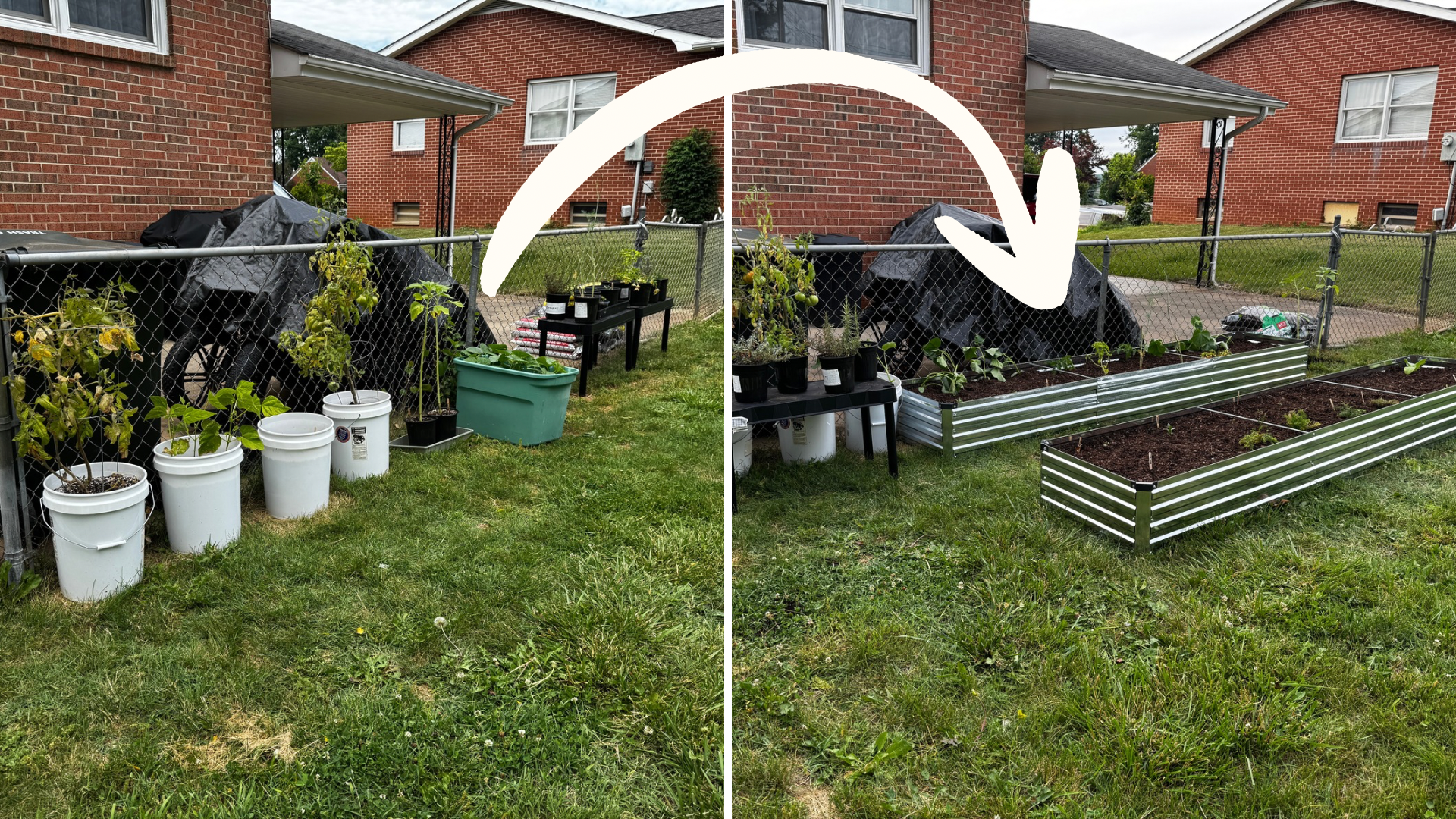
My garden has officially reached the point where my backyard is starting to look less like a backyard and more like a plant nursery.
Between herbs, vegetables, berries, and all of the seedlings I started this spring, I currently have 27 different plants growing. Some of those have multiples.
The buckets were no longer cutting it.
I searched around and found 2 raised beds 10 foot by 2 foot by 1 foot deep without bottoms and I got it on a deal on Amazon.
One thing that has kept me from building larger garden projects is that I'm a renter. It's hard to justify building permanent structures when you know you'll eventually have to leave them behind.
That's why most of my garden has lived in buckets, pots, and containers.
Before ordering anything, my husband reminded me to check the lease. Thankfully, raised beds are allowed. We'll have to reseed the grass when we move, but that's a small price to pay for having more growing space now.
But I have 27 plants different plants going, some have multiples. So I have a lot of plants and I wanted more space because my ultimate goal is to grow enough tea herbs to last me throughout the winter. And I drink a lot of tea. When it’s cold, herbal tea is my replacement for water. Then there’s herbal baths.. you get my point.
So I figured for anyone else who is renter, you might be interested in what I’m doing. The first thing that my husband reminded me to do was check the lease and see if we are allowed to do a raised bed. Thankfully- we are! But we will have to seed some grass before we leave. No bigge.
Garden Planning
As I am still learning about the plants that I am growing, I had some AI assistance in laying out my garden. I will only be using this garden for one season (June-December) before it gets broken down and moved to a new house.Most planting guides assume you're planning around the mature size of a plant. Normally that's great advice.
The problem is that I'm only using these beds from June through December before they get dismantled and moved. Many of my herbs won't reach their full mature size during that time.
I used AI to help estimate how large the plants would likely become this season rather than several years from now. That gave me a starting point for arranging everything.
This is the layout that I came up with based on the bot’s information. I will have one bed dedicated mostly to food herbs and vegetables and the other dedicated to tea herbs.
I also made sure to got o suncalc.org and checked the sun’s course around my house.
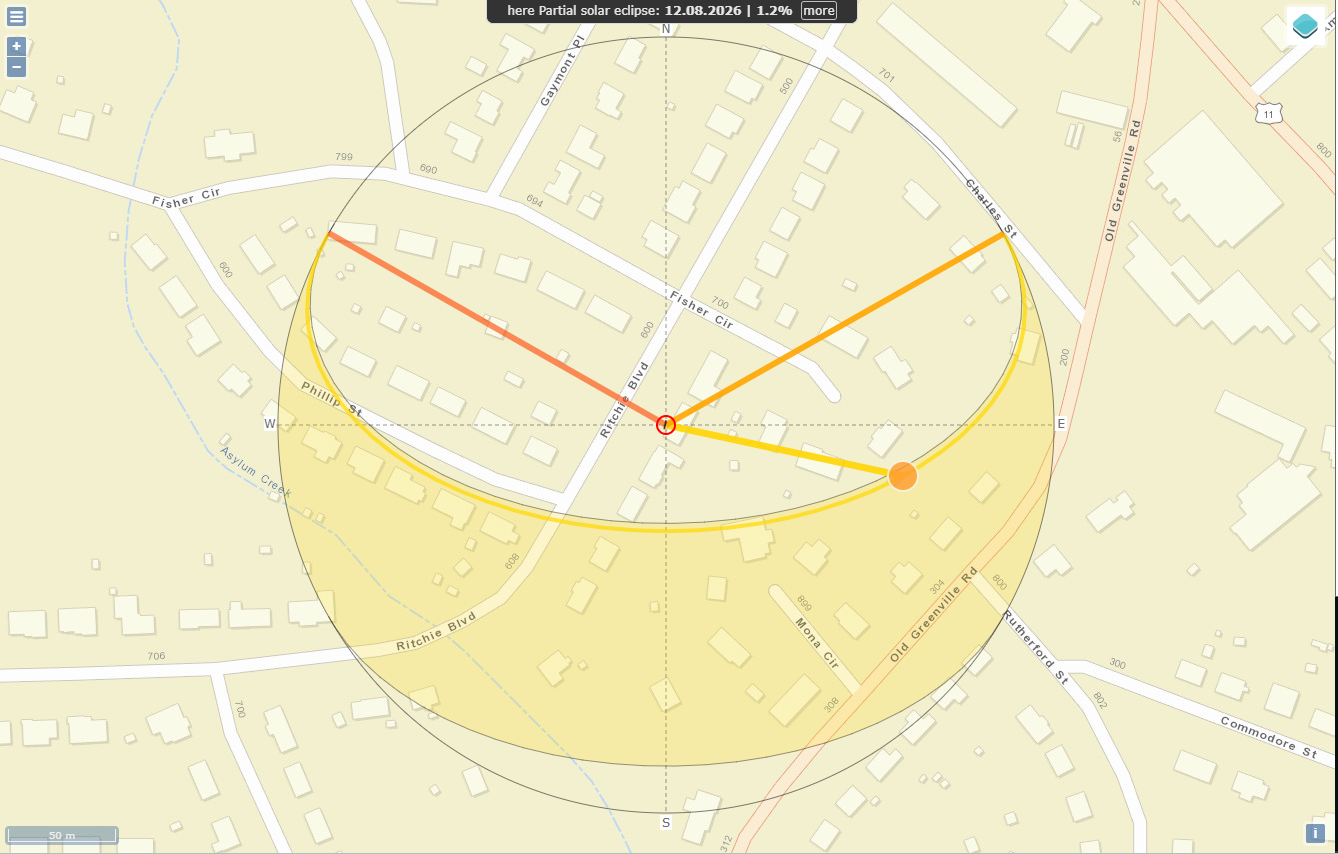
This way I would know what taller herbs and vegetables are going to be casting shade in certain directions.
The raised beds that I bought are galvanized steel and required me to put them together. But it only took me about an hour to do so. The first one was a bit confusing because the instructions weren’t the best (think IKEA instructions). The second one took half the time because I used a drill and I had an idea of what I was doing.
Filling the Beds
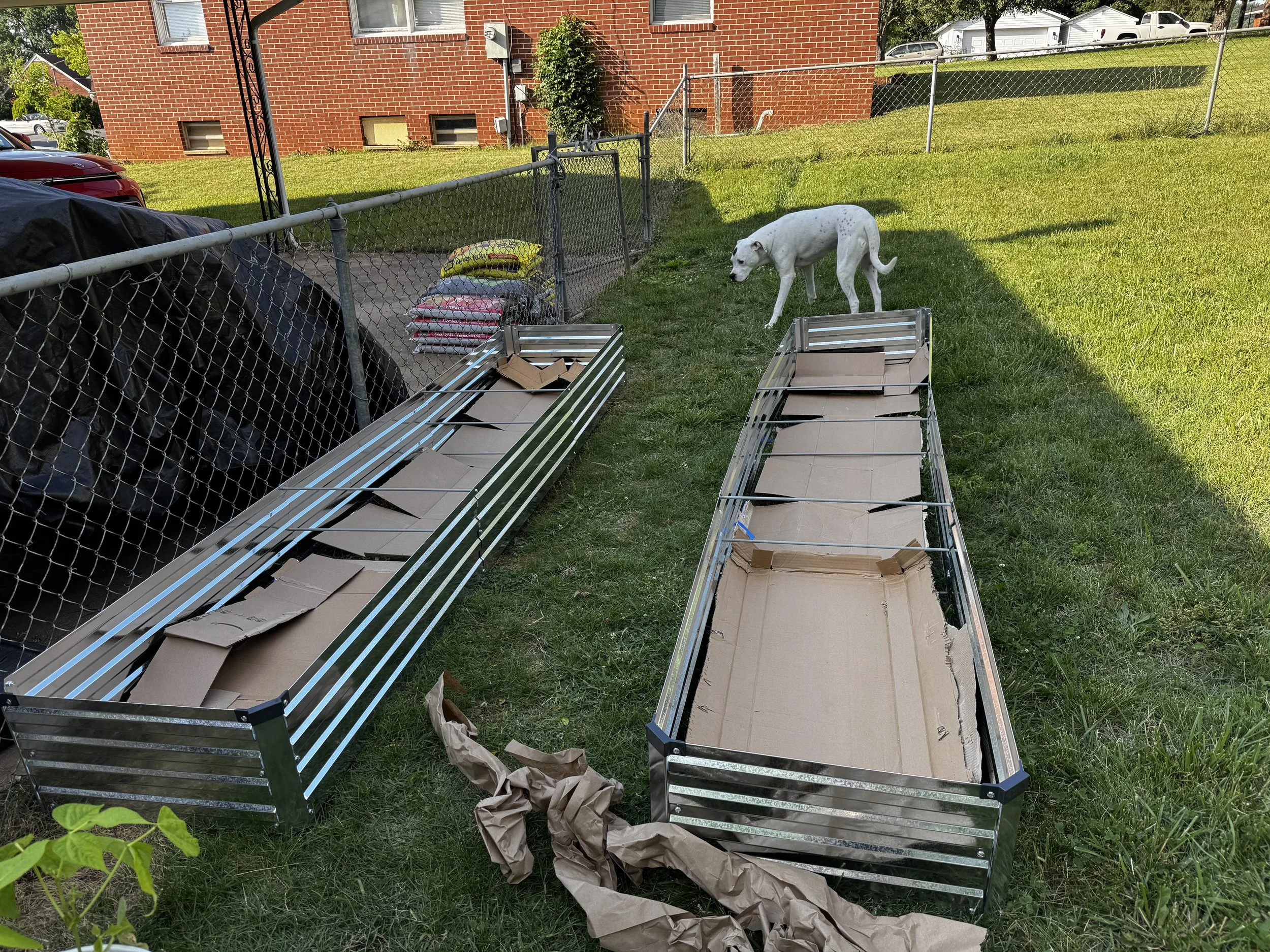
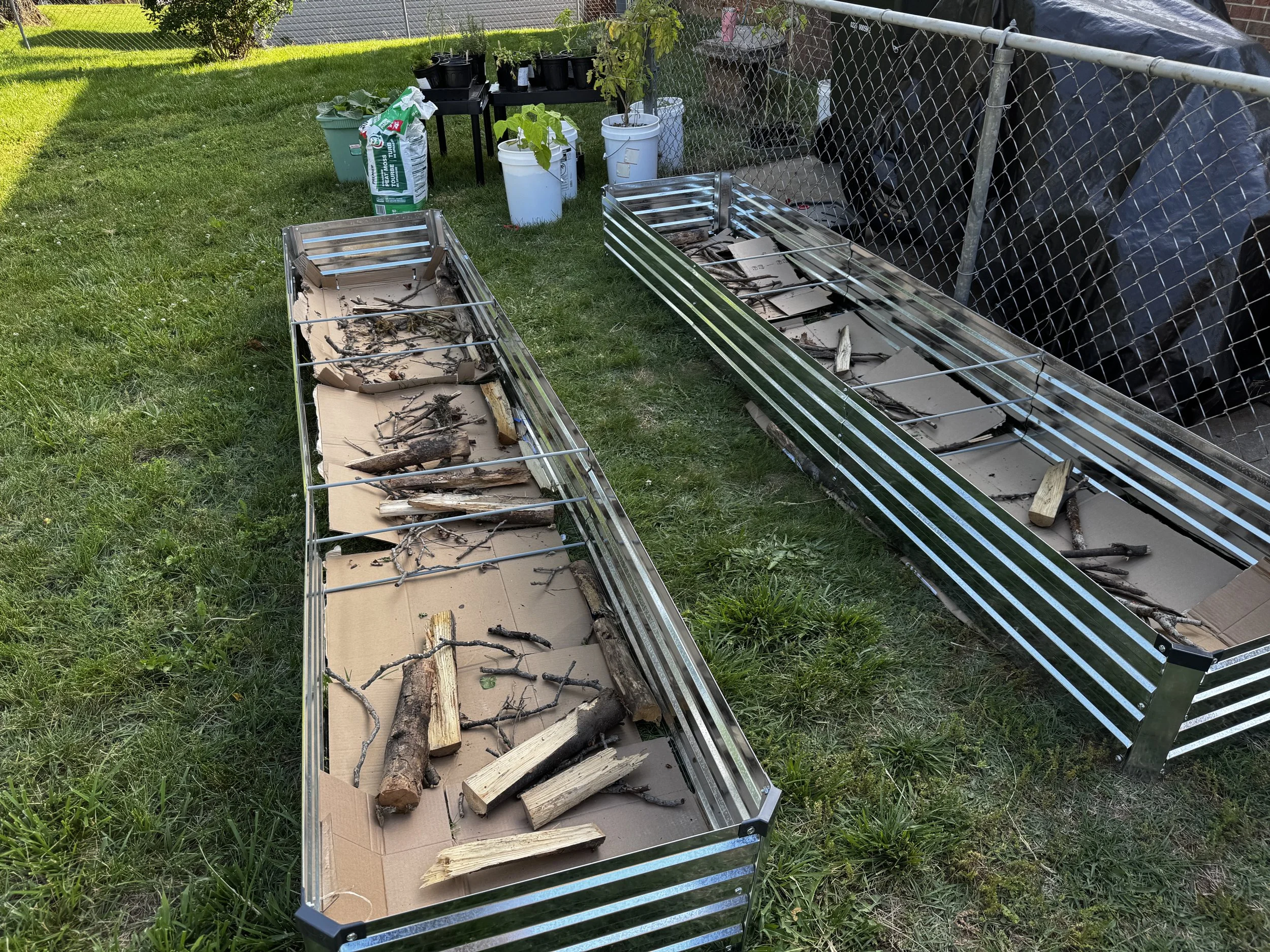
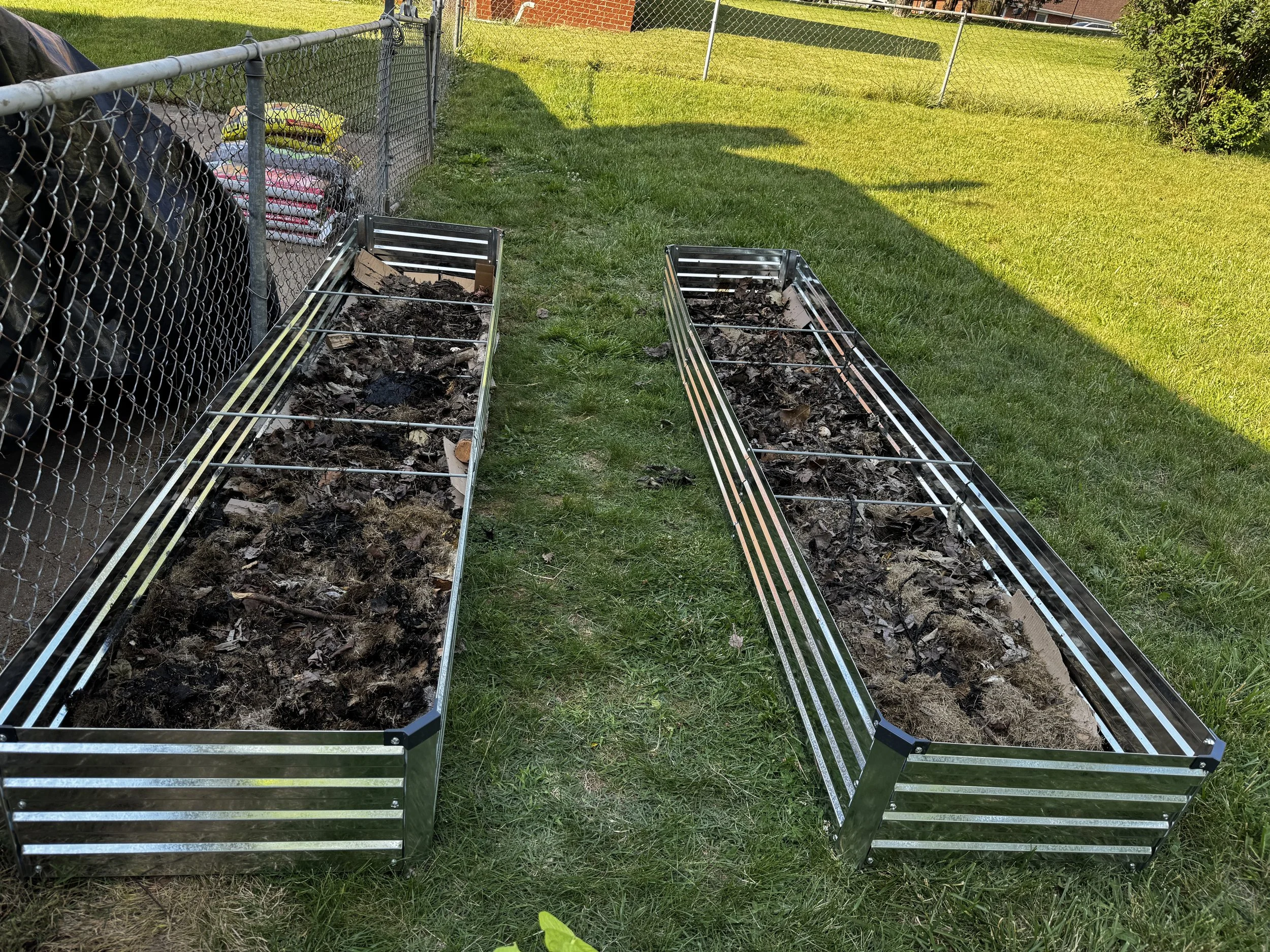
To fill the beds, I first laid out some cardboard to kill the grass and act as a slight barrier. Then I took the sticks from around the yard and some old firewood and used that as the first layer.
The second layer was some old firewood and sticks under a thin layer old, badly maintained compost that has been sitting in an old trash can for about a year.
Then came the new materials. I spent about $60 at Lowe’s and bought:
4 bags of Scotts Top soil
6 bags of Black Kow compost
3 bags of Sta-rite brown mulch
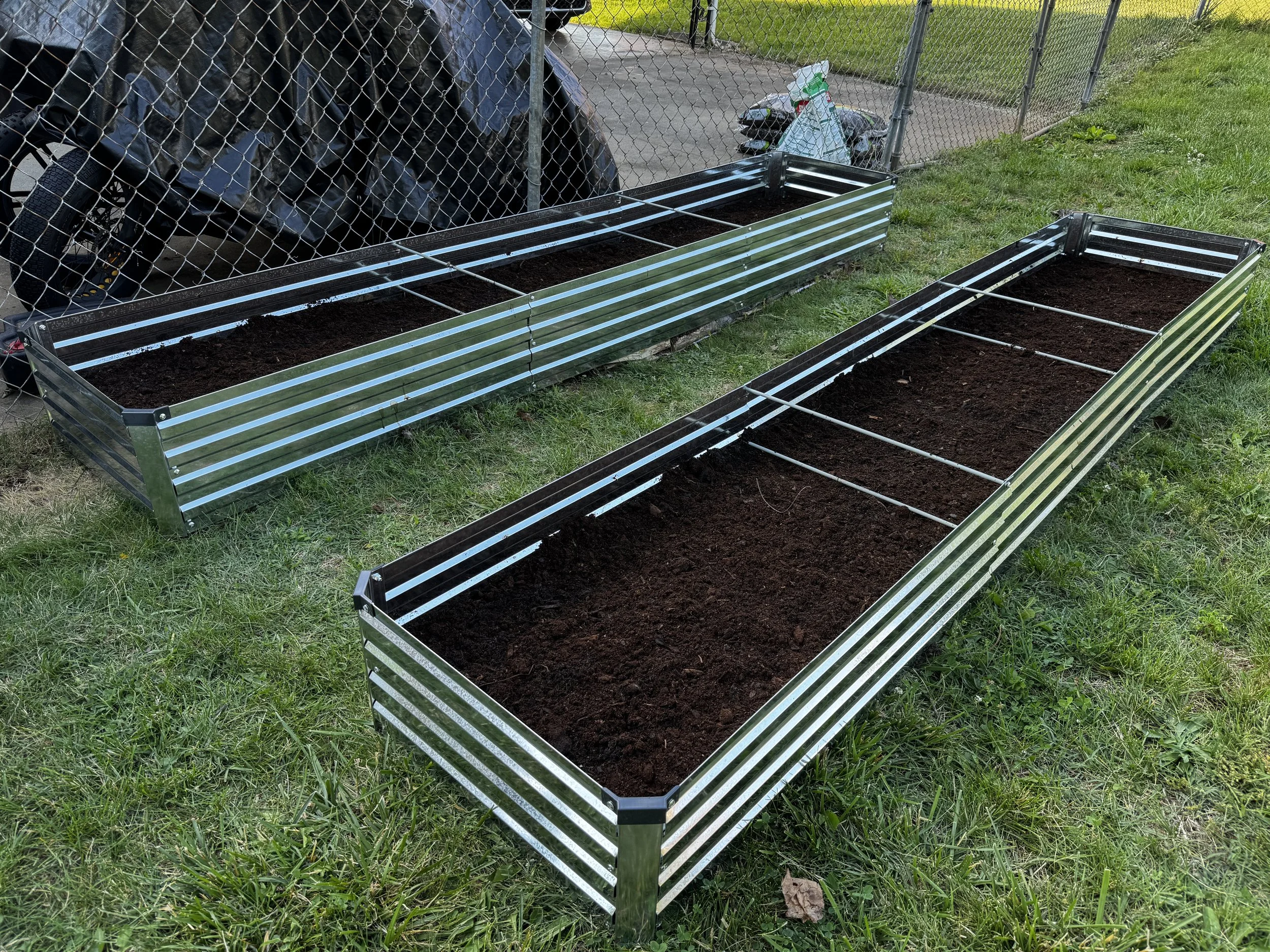
In my head, I was almost done.
In reality, the beds were only about half full.
Soil math continues to be one of gardening's greatest scams.. It was disappointing, but I over estimated how much my little compost bucket had in it.
So I ran up to Walmart and bought 10 - 2 cubic foot bags of garden soil for another $50. I ended up using 8 of the 10 bags and kept the other 2 for later.
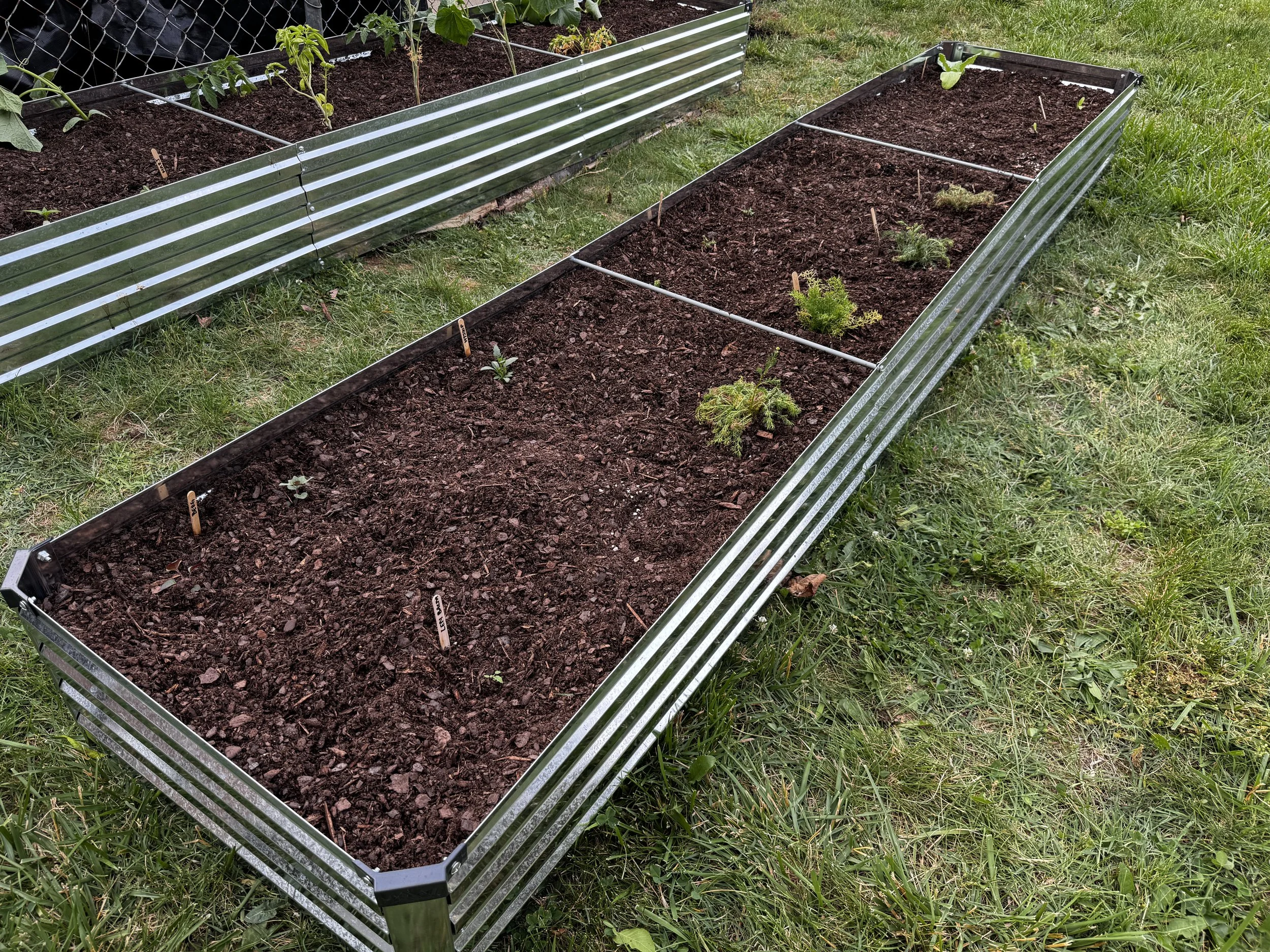
I didn’t want to fill the beds to the brim as I wanted to give new seedling and sprouts a small amount of wind protection. I also didn't fill the beds completely to the top because Virginia apparently believes level ground is optional. If I filled them to the brim, every heavy rain would probably send soil and water flowing over the downhill side of the bed.
Now all that’s left is tagging the plants the survive the transplant into the garden bed.
While planning these beds, I found myself jumping between gardening books, seed packets, sunlight maps, companion planting charts, and several different gardening apps.
None of them really did everything I wanted.
I wanted something that could help with bed layout, companion planting, sunlight requirements, harvest tracking, and growing herbs from seed all the way through drying and using them.
After enough frustration, my husband and I looked at each other and basically said, "Fine. We'll build it ourselves."
So with my husbands help, we are creating a gardening app that will help you lay out your beds, and garden from seed to tea cup. Keep an eye out for it as I am hoping to get it out by the end of 2026!
For now, the beds are filled and the transplanting has begun.
Some plants will probably thrive. Some will probably complain. A few will almost certainly teach me a lesson I wasn't planning to learn.
But that's gardening.
My goal is still the same as it was when I started: grow enough herbs to keep myself stocked in tea, baths, and cooking ingredients through the winter.
We'll see how close I get by the end of the season.