
What Are Food Packaging Chemicals?
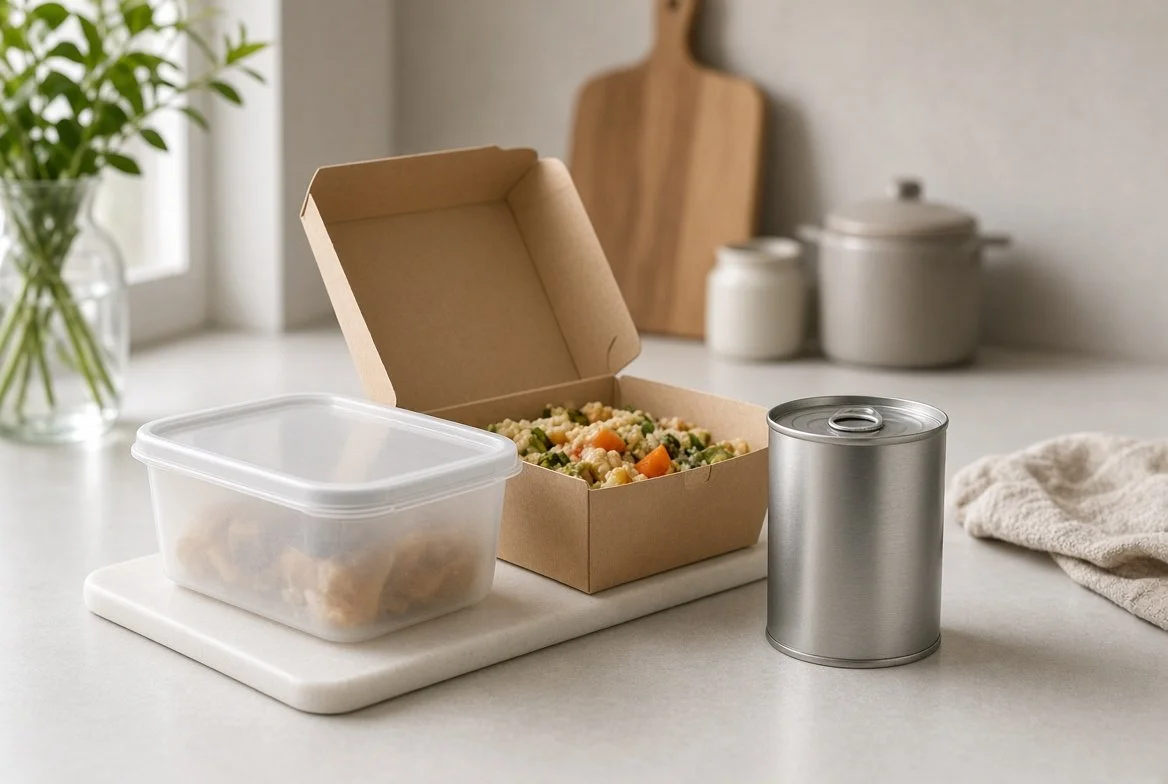
Food packaging chemicals are substances used to make packaging stronger, more flexible, grease-resistant, printable, or better at preserving food. Some of these chemicals can migrate into the food itself — especially when the food is fatty, hot, acidic, or stored for a long time. The ones that draw the most attention include certain plasticizers, bisphenols, PFAS, and related compounds.
Quick Reference
Simple definition: Chemicals used in packaging materials that can sometimes move into food
Main concern: Low-level, ongoing exposure to substances that may act as endocrine disruptors or persist in the body
Top places found: Plastic containers and wraps, metal can linings, grease-resistant paper and cardboard, takeout containers, and some inks and adhesives
Key action: Reduce contact between food and plastic (especially when hot or fatty), choose alternatives when practical, and avoid heating food in plastic
Why it Matters
Most food packaging is designed to keep food safe from contamination and spoilage. The concern arises when chemicals from the packaging transfer into the food at levels that add to everyday exposure. Some of these chemicals can interfere with hormone systems; others are highly persistent.
Exposure is usually low from any single meal, but it can add up because packaged food is so common. Fatty foods, hot foods, and acidic foods tend to pull more chemicals out of packaging than dry, cool foods do. Children and pregnant people are often considered more sensitive to hormone-related effects, which is why reducing unnecessary sources is frequently recommended.

Where You Can Find Them
-
Plastic containers, bottles, and film wraps (plasticizers, residual monomers, additives)
-
Metal food and beverage cans (epoxy linings that may contain BPA or alternatives)
-
Grease-resistant wrappers, microwave popcorn bags, and some takeout packaging (PFAS or similar treatments)
-
Paper and cardboard packaging (inks, adhesives, coatings, and in some cases mineral oils from recycled content)
-
Plastic-coated paper cups, lids, and disposable serviceware
-
Processing equipment and gloves used in food manufacturing (can transfer chemicals before the food is even packaged)
How Chemicals Move from Packaging into Food
Migration is the process of chemicals moving from the packaging material into the food. Several factors make it more likely:
-
Fat content — Many packaging chemicals dissolve more easily in fats and oils, so greasy or oily foods tend to pick up more.
-
Heat — Higher temperatures speed up migration. Microwaving in plastic, pouring hot food into plastic containers, or storing warm food in plastic increases transfer.
-
Time — Longer contact (shelf-stable foods, leftovers stored for days) allows more migration.
-
Acidity and alcohol — Acidic foods and beverages can increase the release of some chemicals from linings and plastics.
-
Surface contact — The more packaging surface touches the food, the greater the potential transfer.
This is why guidance often focuses on not heating food in plastic, transferring fatty leftovers out of takeout containers, and preferring glass or stainless steel for long-term storage.

The Simple Explanation
Food packaging serves important purposes — protection, shelf life, and convenience — but the materials are not always inert. Plastics contain additives that improve flexibility, clarity, or durability. Paper and cardboard may be treated for grease resistance or printed with inks and adhesives. Metal cans are almost always lined so the food doesn’t react with the metal.
Some of these substances are not chemically locked into the packaging. Over time, and especially under heat or with fatty foods, small amounts can move into what we eat. The chemicals that receive the most scrutiny include:
-
Bisphenols (BPA and substitutes like BPS) used in some can linings and hard plastics
-
Phthalates and other plasticizers used to soften plastics
-
PFAS used for oil and water resistance in some paper and fiber packaging
-
Other additives, photoinitiators from inks, and residual monomers
Regulatory agencies set migration limits and evaluate safety, but scientific understanding of low-dose, long-term, and mixture effects is still developing. Many manufacturers have moved away from some of the better-known chemicals (such as BPA in many can linings), yet replacements are not always fully free of similar concerns.
Common Misconceptions
-
“If it’s approved for food contact, zero chemicals transfer.” Approval means migration is expected to stay within assessed limits, not that transfer is zero.
-
“Only plastic is the issue.” Can linings, grease-resistant paper, and inks can also contribute.
-
“Recycling packaging removes the chemical concern.” Recycled materials can still contain additives, and some chemicals persist through recycling.
-
“A quick rinse or wipe solves it.” Once chemicals have migrated into the food, rinsing the packaging doesn’t remove them from what you’re about to eat.
What You Can Do About It
Practical steps focus on reducing the conditions that increase migration:
-
Transfer food out of plastic takeout containers and plastic-coated packaging soon after bringing it home, especially if the food is hot or greasy.
-
Avoid heating food in plastic containers or with plastic wrap; use glass or ceramic instead.
-
Prefer glass, stainless steel, or ceramic for storing leftovers and packing food.
-
Cut back on microwave popcorn in traditional bags and heavily packaged greasy snacks when it’s easy to do so.
-
Choose fresh or minimally packaged foods more often when practical.
-
For canned foods, variety and moderation help; some brands now use alternative linings.
-
Wash hands after handling receipts or thermal paper if you’re also preparing food (related transfer concern).
These steps won’t eliminate every exposure, but they meaningfully reduce some of the higher-migration situations.
Conclusion
Food packaging chemicals are substances used to make packaging functional that can sometimes move into food, especially under heat, time, and contact with fatty or acidic items. The main groups of concern include certain plasticizers, bisphenols, and grease-resistant treatments. You don’t need to avoid all packaged food, but reducing plastic contact with hot or greasy foods, choosing better storage materials, and limiting the most treated packaging are practical ways to lower everyday exposure.