
What Are Microplastics?
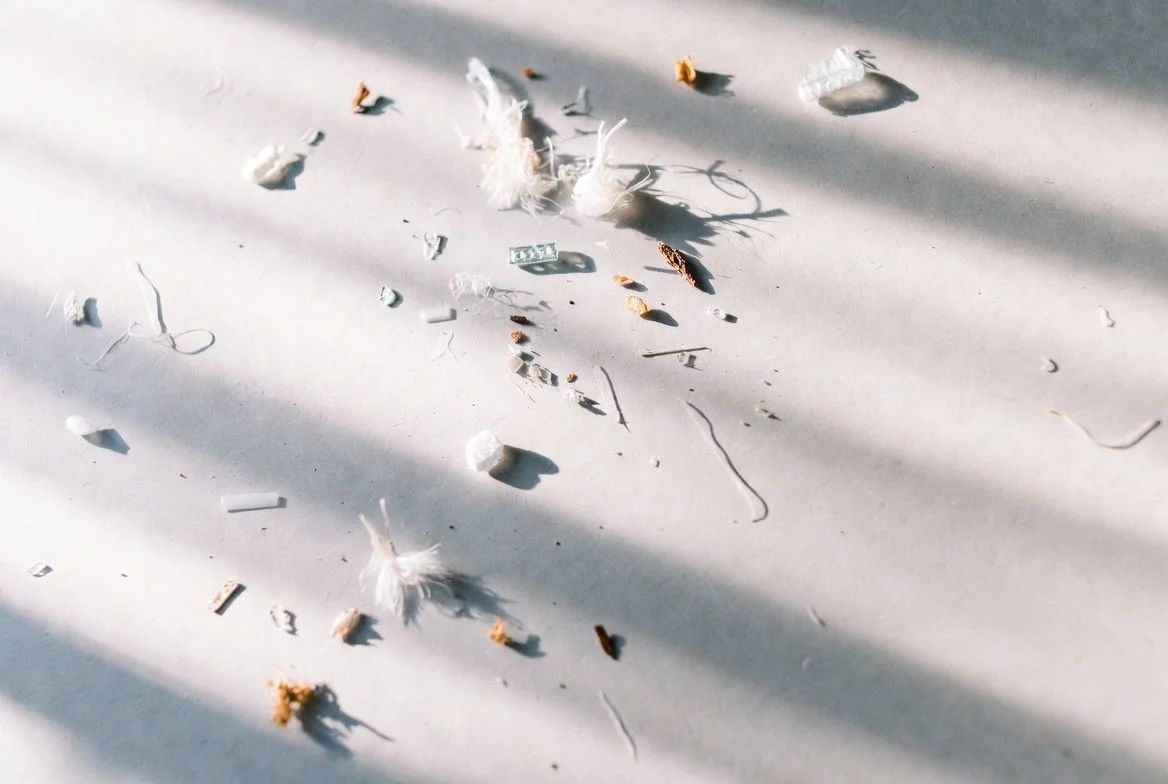
Microplastics are small plastic particles less than 5 millimeters in size. Some are manufactured at that scale on purpose; most form when larger plastic items break down over time. They have been found in oceans, rivers, soil, air, drinking water, food, and even inside the human body.
Quick Reference
Simple definition: Plastic particles smaller than 5 mm, either made that size or formed when larger plastics break down
Main concern: Widespread presence in the environment and the body; potential physical and chemical effects still being studied
Top sources: Breakdown of larger plastics, synthetic clothing fibers, tire wear, and some personal care or industrial products
Key action: Reduce single-use plastics, wash synthetic clothing less frequently or with capture devices, and support better waste and product design
Why it Matters
Microplastics are now nearly ubiquitous. They have been detected in remote polar regions, deep ocean trenches, agricultural soil, indoor and outdoor air, bottled and tap water, seafood, table salt, and human tissues including blood, lungs, and placenta.
The health effects are still an active area of research. Concerns fall into two main categories: the physical presence of the particles themselves (especially the smallest ones that can move into tissues) and the chemicals they may carry. Plastics often contain additives such as plasticizers, stabilizers, and flame retardants. They can also adsorb other pollutants from the surrounding environment. Whether typical environmental exposures cause meaningful harm in people is not yet fully settled, but the scale of contamination has made microplastics a significant scientific and regulatory focus.

Where You Can Find Them
-
Oceans, rivers, lakes, and drinking water (both tap and bottled)
-
Seafood, especially shellfish and small fish that are eaten whole
-
Table salt, honey, beer, and other foods
-
Indoor and outdoor air (including household dust)
-
Synthetic clothing and textiles (polyester, nylon, acrylic) that shed fibers during wear and washing
-
Tire wear particles from roads
-
Breakdown of plastic bags, bottles, packaging, and other single-use items
-
Some personal care products that previously contained microbeads (mostly phased out in many countries)
-
Industrial plastic pellets (nurdles) lost during manufacturing and transport
Primary vs. Secondary Microplastics
Microplastics are often divided into two groups.
Primary microplastics are manufactured at a small size on purpose. Examples include microbeads once used in some facial scrubs and toothpastes, plastic pellets used as raw material in manufacturing, and some industrial abrasives. Many countries have banned microbeads in rinse-off personal care products, which has reduced that particular source.
Secondary microplastics form when larger plastic items break down. Sunlight, heat, wave action, and physical wear cause plastic bags, bottles, fishing gear, packaging, and synthetic fabrics to fragment into smaller and smaller pieces. This is currently the larger source in most environments. Secondary microplastics include the tiny fibers that shed from polyester and nylon clothing every time they are washed or worn, and the particles generated by tires as they wear on roads.
The distinction matters because the solutions differ. Primary microplastics can be reduced by changing product formulations and industrial handling. Secondary microplastics require reducing the amount of plastic that enters the environment in the first place and improving how we manage the plastic already in use.

The Simple Explanation
Plastics are made of long chains of molecules called polymers. Most conventional plastics do not biodegrade on human timescales. Instead, they fragment. Ultraviolet light from the sun makes them brittle; mechanical forces (waves, wind, abrasion) break them into smaller pieces. Over time, a plastic bottle or bag can become thousands of microplastic particles.
Size categories are somewhat arbitrary but useful. Microplastics are generally defined as particles smaller than 5 mm. Particles smaller than 1 micrometer are often called nanoplastics. The smaller the particle, the more easily it can move through the environment and, potentially, into living tissues.
Microplastics are not a single substance. They vary in polymer type (polyethylene, polypropylene, polyester, polystyrene, etc.), shape (fragments, fibers, beads, films), size, and chemical makeup. Many carry additives that were mixed into the original plastic, and they can pick up additional chemicals from seawater, soil, or air. This complexity is one reason research on health effects is challenging — different particles can behave very differently.
Humans are exposed through ingestion (food and water), inhalation (air and dust), and to a lesser extent skin contact. Studies have found microplastics in human blood, lung tissue, and the placenta, showing that at least some particles can cross biological barriers. What those particles do once inside the body, and at what concentrations they matter, remains an active area of scientific investigation.
Common Misconceptions
-
“Microplastics are only an ocean problem.” They are also widespread in soil, freshwater, air, and indoor environments.
-
“If I avoid seafood, I avoid microplastics.” They have been found in many other foods, drinking water, and household dust.
-
“Biodegradable plastics solve the problem.” Many plastics labeled biodegradable still require specific industrial conditions to break down and can fragment into microplastics in normal environments.
-
“The health effects are fully proven.” Evidence of widespread exposure is strong; evidence of clear harm at typical environmental levels is still developing.

What You Can Do About It
Individual actions cannot eliminate microplastics, but they can reduce personal contribution and exposure:
-
Cut back on single-use plastics, especially items that fragment easily.
-
Wash synthetic clothing less often, use colder water, and consider a washing-machine filter or laundry bag designed to capture fibers.
-
Choose natural-fiber clothing when practical.
-
Vacuum and dust regularly to reduce indoor particle loads.
-
Support policies and companies that reduce plastic packaging and improve waste management.
-
Prefer glass, metal, or other non-plastic materials for food and drink storage when feasible.
System-level changes — better product design, reduced plastic production, improved wastewater treatment, and circular material systems — will have the largest long-term impact.
Conclusion
Microplastics are small plastic particles that now appear throughout the environment and in the human body. Most form when larger plastics break down; some are manufactured at small sizes. While the full health consequences of current exposure levels are still being researched, the scale of contamination is clear. Reducing the amount of plastic that enters the environment, capturing fibers from synthetic textiles, and making more deliberate material choices are practical steps that help at both the personal and broader level.